Meet the team: Will McEwan, Co-founder and Chief Scientific Adviser, TRIMTECH Therapeutics
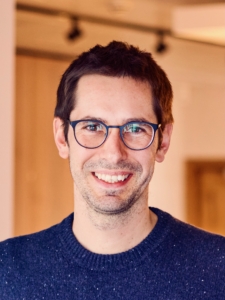
Tell us more about your professional and academic career, how that led you to leading a research group at the UK Dementia Research Institute at the University of Cambridge, and co-founding TRIMTECH.
I did my PhD at the University of Glasgow with Prof Brian Willett, studying a protein called TRIM5 that can engage and destroy viruses such as HIV inside cells. During this work, I collaborated with Dr Leo James at the MRC Laboratory of Molecular Biology and in 2009, I joined his group to study a different TRIM protein, TRIM21, which like TRIM5 also destroys viruses. Critically, TRIM21 binds to antibodies rather than to the virus itself. This raised the exciting possibility that other cellular proteins could be similarly destroyed by using antibodies that target them. I became interested in whether we could use this approach to remove aggregates of tau, a feature of many neurodegenerative diseases. In 2017, I started a group at the University of Cambridge with a Wellcome Trust & Royal Society Sir Henry Dale Fellowship to start applying TRIM21 to protein aggregation and in 2020, joined the UK Dementia Research Institute as a group leader. Moving to neurobiology was a big change for me, and it has been a real pleasure getting to know a whole new area of science, and its scientists, while keeping a foot in the infection and immunity world.
In 2023, the culmination of the work investigating the role of TRIM21 in the selective removal of protein aggregates, led to my co-founding TRIMTECH with my longtime collaborator Dr Leo James, and Dr Damian Crowther. This transition has taken me beyond pure research to thinking more about clinical applications and active engagement with the biotech industry. It has been both challenging and incredibly exciting, opening up new perspectives on how our work can address patient needs.
Can you describe what a typical day looks like in your dual role as TRIMTECH’s Chief Scientific Adviser and as an academic group leader?
I like to meet people one-on-one for discussions about lab work, especially for new data, or an assay that needs troubleshooting. Alongside this, I will be joining meetings with collaborators and TRIMTECH colleagues, and writing reports, papers, and grant applications. I do also find that some of the most productive (and most enjoyable) discussions often come outside of scheduled meetings. I am a strong proponent of the afternoon tea break!
What is it about TRIMTECH’s approach that makes it stand out among other companies developing different types of targeted protein degradation (TPD) therapeutic modalities?
In order to remove toxic protein aggregates to treat diseases like Alzheimer’s, we are redirecting a cellular pathway that has evolved to destroy infectious agents like viruses which come in a huge array of diversity. TRIM21 therefore needs to be very versatile in order to handle these targets. This is different to most other E3 ligases, which degrade comparatively invariant cellular proteins. It is this adaptability, combined with a very strong degradation signal, that makes TRIMTECH’s scientific approach different from others. It means that we can go after traditionally difficult targets such as multimeric protein assemblies. In fact, the bigger the target the more aggressively TRIM21 acts, which is an exciting and unusual property. This coupled with the ability to design CNS penetrance into our small molecule degraders means that we have the potential to deliver disease modifying medicines in pill form to patients, another big advantage over other strategies.
What are some of your proudest moments in your career so far?
Nothing beats the moment after performing a well-executed experiment. Not necessarily a big discovery (though, of course, that’s great on the rare instances it happens!), just a finding that unambiguously shows you something you didn’t know before and takes you forward. Nowadays, being mostly desk based, that is an experience I really miss, so I take a lot of vicarious pleasure in my colleagues’ work. I am also incredibly proud of the progress already made within TRIMTECH. It’s really exciting to see our research developing into the potential for real-world impact that could change patient’s lives for the better.
Make a bold prediction about the future of the CNS therapeutics sector.
When I was new to the Alzheimer’s field, I remember seeing a board at a conference that invited delegates to write on a Post-It the features of Alzheimer’s disease that new therapeutics should target. The board was an array of dozens of ideas – lipids, iron metabolism, endocytosis, synaptic dysfunction, proteostasis networks, all kinds of inflammation, cell death, protein misfolding and many other things besides. In my old field of HIV, there is only a single disease causing agent — the virus itself. I think that as we understand more about Alzheimer’s disease, we will hone in on the central causative processes and the Post-It board will simplify. My opinion is that ordered protein assemblies will be recognised as the etiological agent in almost all neurodegenerative diseases, a bit like HIV is to AIDS (though not infectious!). My prediction is that successful disease-modifying treatments will target these assemblies or processes upstream of them preventing their formation. When coupled with molecular diagnostics that detect pathology before symptom onset, these drugs will bring us to a world where many neurodegenerative diseases are preventable. The potential to deliver such a therapy is what excites me about TRIMTECH.
Could you share any advice for early-career researchers looking into ways to develop and commercialise their ideas?
Academics naturally tend to look for questions and problems. We get excited by detail and nuance, which is essential in the lab, but not so much when you only have a few minutes of someone’s busy calendar. Distilling ideas to a single proposition that gets people interested is key and takes a lot of iteration. Even armed with exciting data, it is often not obvious what that single, tractable idea is. Finding people who have an understanding of how your message will land on the other side of the desk is essential. At TRIMTECH, we are incredibly lucky to have Dr Damian Crowther, Head of Research and Co-Founder, and Dr Nicki Thompson, CEO, on our team, both of whom fully embody that expertise. The team we have built, coupled with our strong scientific foundations, built on over 20 years of research into TRIM21 means that our research can transition effectively beyond the academic setting. It’s wonderful to think that fundamental research has the potential to change the treatment paradigm for patients with life-limiting diseases.


